
Key takeaways
- Google Workspace alternative for full-suite teams: Microsoft 365 suits Office teams, Zoho Workplace suits tight budgets, and Proton for Business suits privacy-first teams.
- Google Workspace alternative for small business: Neo Mail fits teams of 1 to 10 that want email, a free domain, and a free AI website.
- Google Workspace price increase: Google raised Business Standard to $14 per user per month after bundling Gemini AI.
- Switching without losing email: Your email can move with your domain if you export first and update your DNS records.
What are business email providers, and which one should you choose?
A business email provider gives you an address on your own domain, like you@yourbusiness.com, and looks after the storage, security and delivery behind it. Neo Mail is a natural fit for small businesses with 1 to 10 employees, since your email, domain and website sit in one account. Need Docs and Meet too? Google Workspace has them built in, and Outlook-based teams will feel at home with Microsoft 365. For privacy, look at Proton Mail. For fast, no-frills email, Fastmail keeps things simple.
How did we evaluate business email providers?
We compared each provider on the same seven criteria, all of which affect a business's daily email:
- Starting price and billing term: the real cost of the business email depends on monthly versus yearly billing and on renewals.
- Storage per user: small mailboxes fill up fast with attachments.
- Uptime commitment: a published service level agreement (SLA) shows what the host promises.
- Sender authentication: support for SPF, DKIM and DMARC keeps your mail out of spam.
- Sending limits: caps decide how many emails you can send each day.
- Security: two-factor sign-in, encryption and phishing filters protect accounts.
- What's included: a free domain, apps and a free trial change the value.
We checked each provider's official pricing and feature pages in October 2026. Every provider gets the same criteria, and no provider paid for placement.
How do the best business email providers compare?
The table below lists the five providers alphabetically, with each one's starting price and trial.
What is the full suite replacement for Google Workspace?
Microsoft 365 is the closest full replacement for Google Workspace, with its own email, file storage, office apps and video meetings.
Microsoft 365: best for teams that want a full office suite
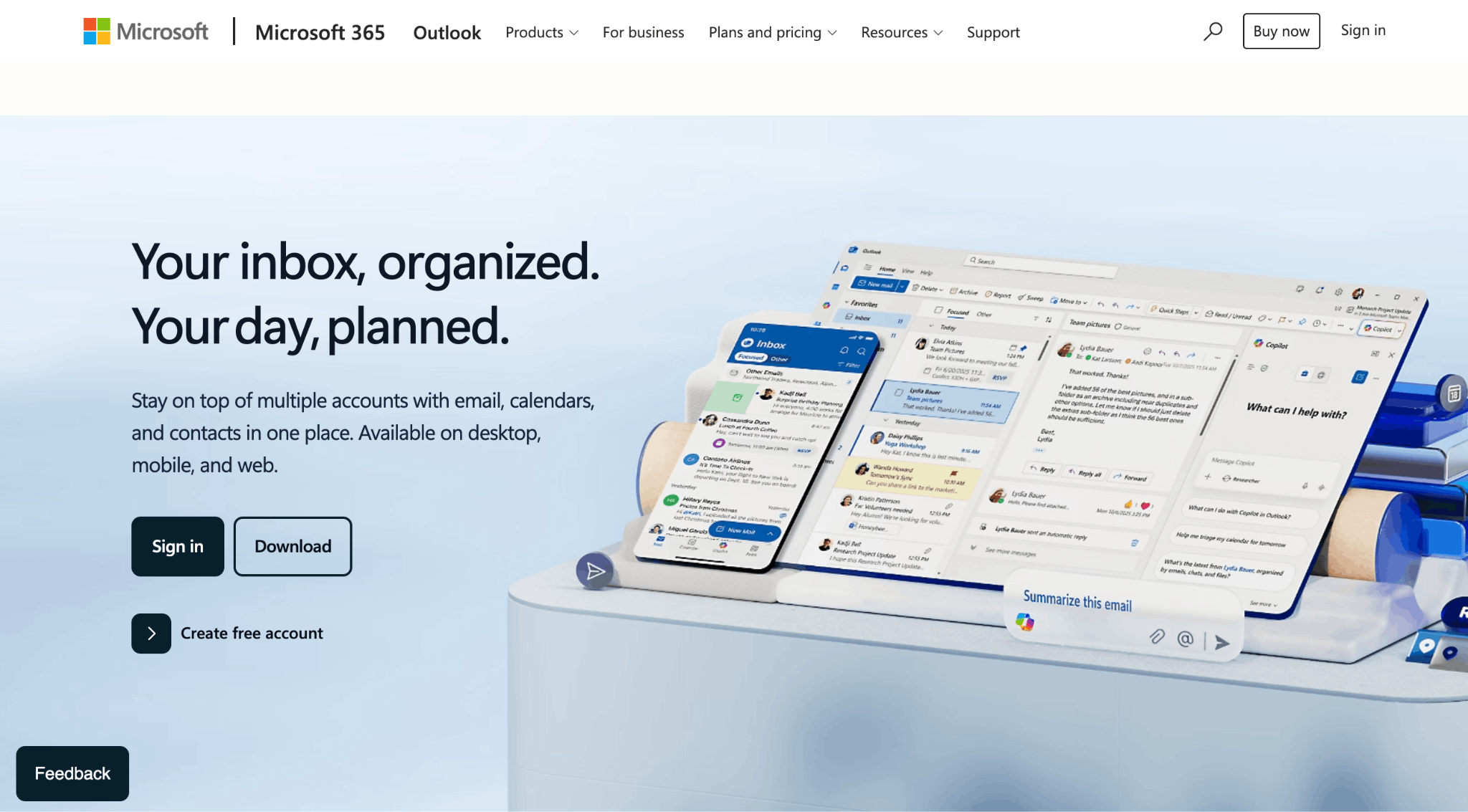
Best for: teams that already work in Word, Excel, Outlook and Teams.
Starting price: Business Basic costs $7.00 per user per month, paid yearly.
Microsoft 365 gives each Business Basic user 1 TB of OneDrive storage and a 100 GB mailbox, which is far more room than Google's entry plan. The plan covers up to 300 users and includes Teams for chat and meetings, plus web and mobile versions of Word, Excel, PowerPoint and Outlook. Email runs on Microsoft Exchange, so it works well with Outlook on any device. Business Basic also includes Microsoft's AI chat with web grounding and writing help. Teams moving from Google can use the Google Workspace migration tools in the Microsoft 365 admin center.
Watch out for: Business Basic has no desktop Office apps. You need Business Standard or higher for those, and Microsoft raised its suite prices in July 2026.
What is the budget-friendly full-suite alternative to Google Workspace?
Zoho Workplace is the cheaper alternative to Google Workspace for teams that still want business email, documents, storage, chat and meetings in one place.
Zoho Workplace: best for budget-conscious small teams
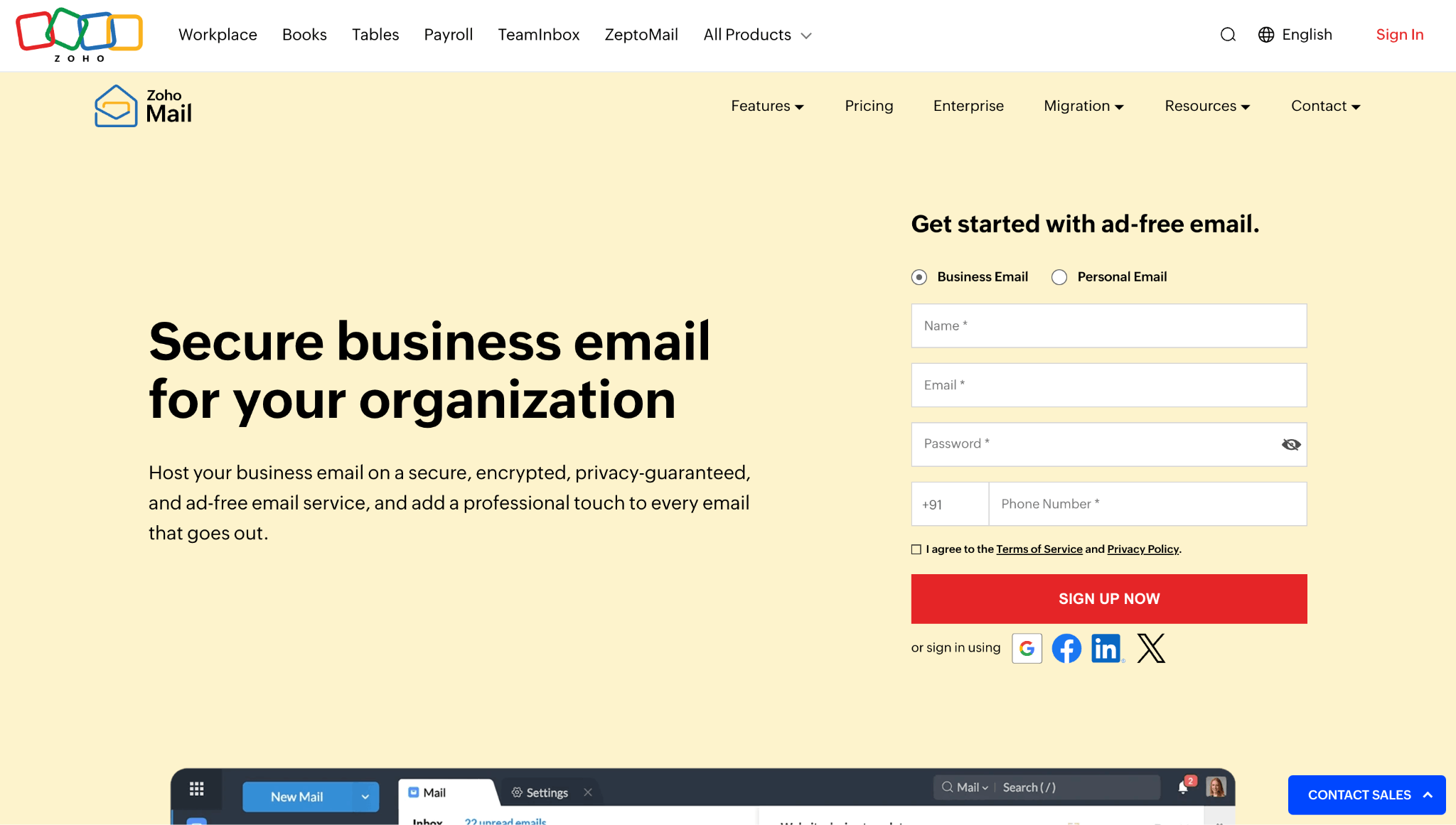
Best for: small businesses that want a full suite at a lower cost per user.
Starting price: Workplace Standard starts at $3 per user per month, billed annually.
Zoho Workplace Standard bundles Zoho Mail with WorkDrive file storage, the Writer, Sheet and Show office apps, Cliq chat and Zoho Meeting. You can mix Mail-only and Workplace plans in the same organization, which helps when only some staff need the full suite. A Mail Lite plan covers email alone for staff who don't need the office apps. Zoho also offers a 15-day free trial of its top edition, with no credit card required. For readers who only want the lowest email price, our guide to cheap email providers goes further.
Watch out for: meetings are a weak spot. One owner on r/Zoho said they switched "mainly because of the high costs" and found the video meetings weaker.
What is the best Google Workspace alternative for a small business?
Neo Mail is the Google Workspace alternative for business email when your team rarely opens Docs, Sheets, or Meet.
Neo Mail: best for small businesses that want email, a domain, and a website
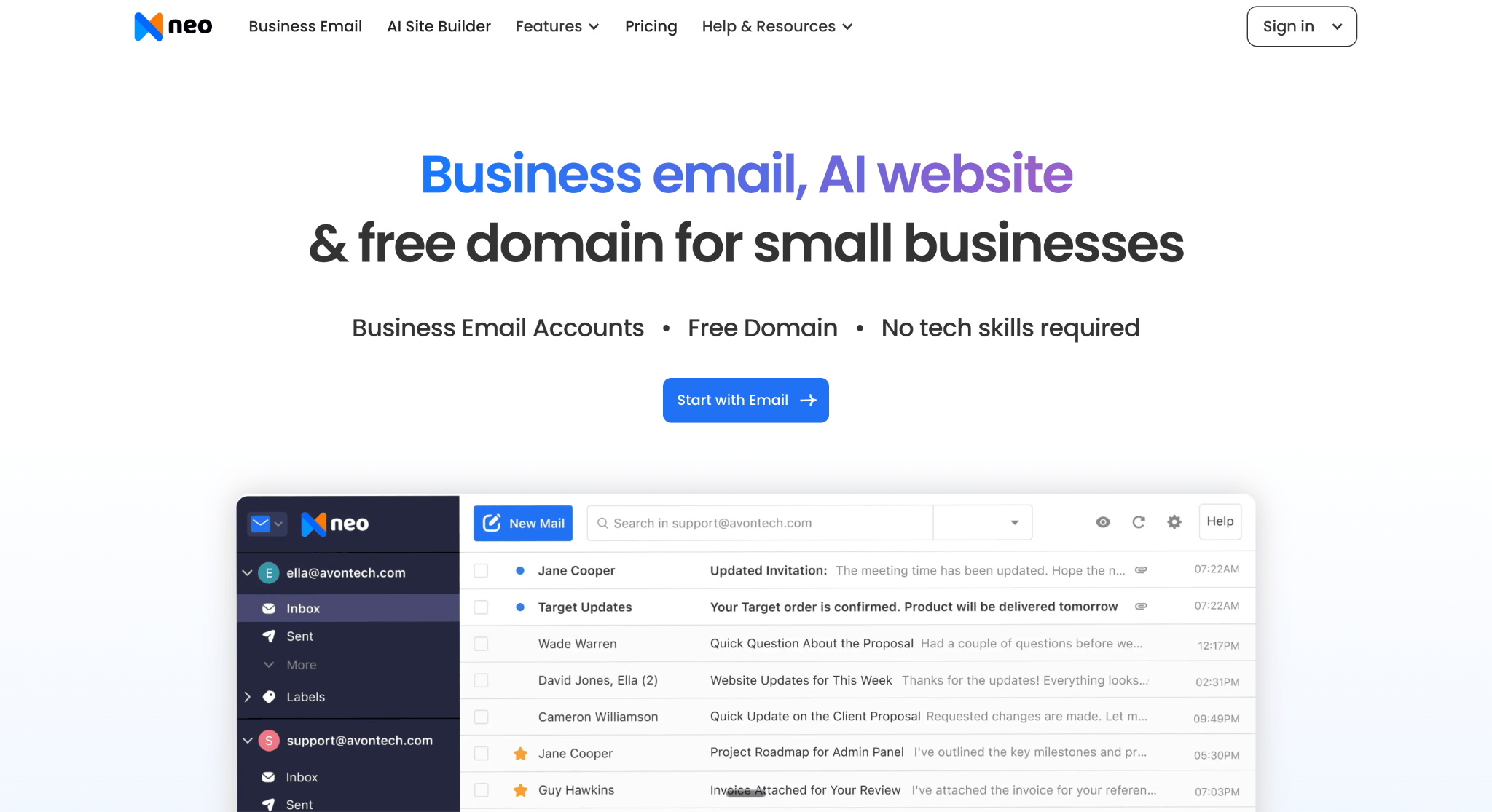
Best for: fashion boutiques, consultants, beauty and wellness businesses, online stores, real estate agents, freelancers and creators.
Starting price: Neo Mail starts at $1.25 per mailbox per month on the 4-yearly plan, with a 15-day free trial.
Neo Mail gives a small business its email, a domain and a website in one place. Every Neo Mail plan includes a free domain if you don't have one, plus a free AI-generated website. Plans come with 15 GB, 50 GB or 100 GB of storage per mailbox, Android and iOS apps, and a built-in calendar with appointment booking. Neo Mail also includes two-factor authentication, anti-spam and custom DKIM. Plans add follow-up reminders, Send Later and Priority Inbox. That mix suits owners who first bought Workspace mainly to get an address on their own domain, and who now pay for apps they rarely open.
Watch out for: Neo Mail has no document, spreadsheet or presentation editors.
What is the privacy-focused alternative to Google Workspace?
Proton for Business is the most private Google Workspace alternative in this list, and its Swiss base suits teams looking for a European option.
Proton for Business: best for teams that put privacy first
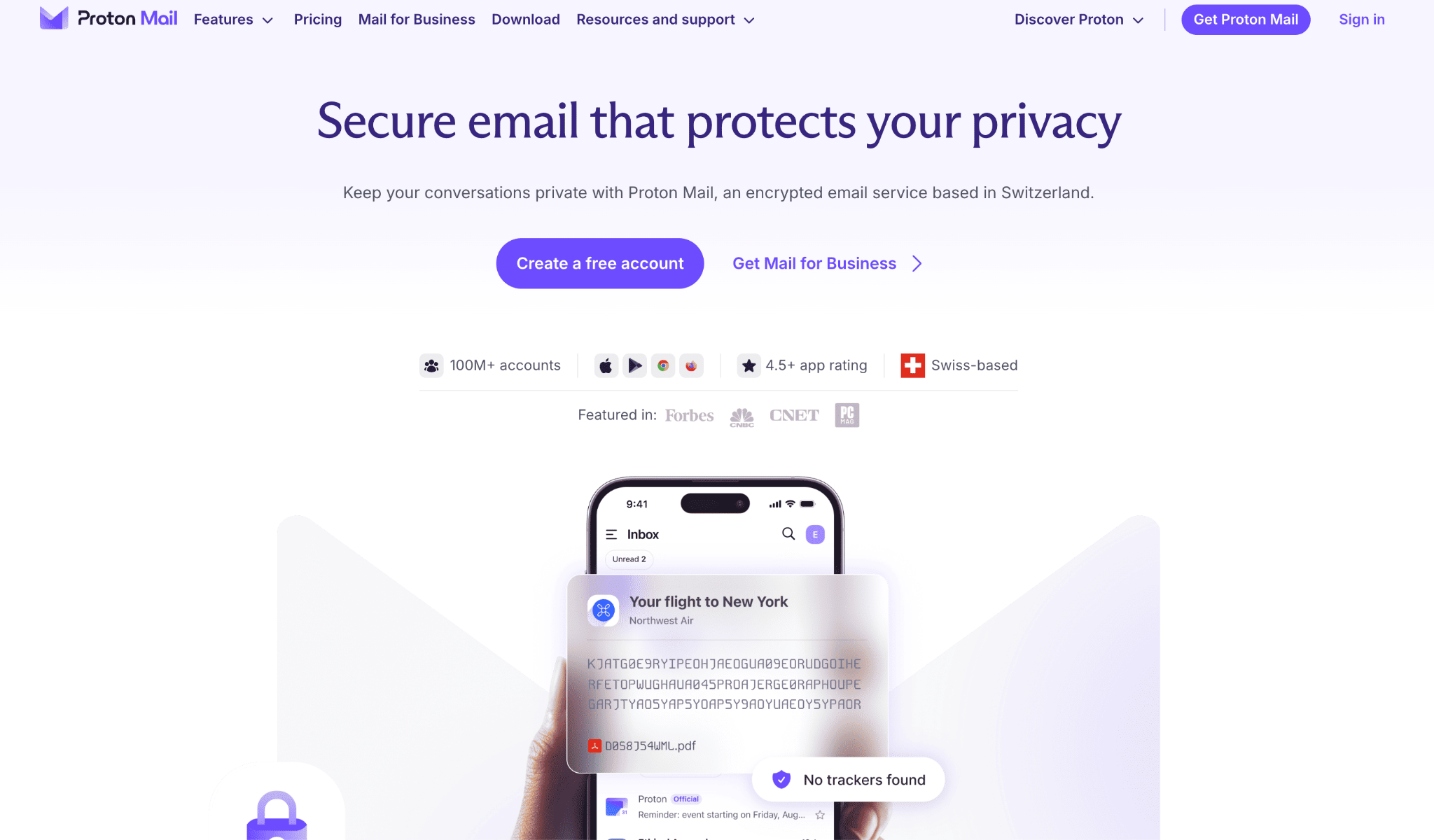
Best for: teams that handle sensitive client data and want end-to-end encrypted email from a Swiss company.
Starting price: Workspace Standard costs $12.99 per user per month, billed at $155.88 every 12 months.
Proton for Business Workspace Standard gives each user 1 TB of storage and supports up to 15 custom email domains. It includes encrypted email and calendar, Proton Drive with a document and spreadsheet editor, and video meetings for up to 100 people. A VPN and a password manager with team vaults are also part of the plan. Proton works with Outlook, Thunderbird and Apple Mail, so your team can keep the email app it knows. New customers also get a 30-day money-back guarantee.
Watch out for: Proton costs nearly twice as much per user as Microsoft 365 Business Basic, and it connects to fewer outside apps than Google or Microsoft.
What do you lose when you leave Google Workspace, and how do you keep your email?
You keep your email when you leave Google Workspace, as long as you move it before you cancel. Your domain stays yours. Some things don't move by themselves, though: Docs and Sheets formatting, shared drive permissions, calendar history, Meet links and apps you sign into with Google.
Follow these steps in order:
- Export your data: use Google's organization data export to download mail, files and calendars.
- Set up the new provider: create mailboxes and import old email. Neo Mail, for example, offers one-click import of existing emails and contacts.
- Update MX records: MX records are the DNS settings that tell the internet where to deliver your email.
- Set up SPF, DKIM and DMARC: Google's email sender guidelines require SPF or DKIM for every sender. Anyone sending 5,000 or more messages a day to Gmail needs all three.
- Cancel last: keep Workspace active until new mail arrives in the new inbox.
How do you choose the right Google Workspace alternative?
Choose by the apps your team actually opens each week, not by the longest feature list. Use this table to match your situation to an option.
Two habits make the choice easier. First, write down which Google apps each person used in the last month. Second, check the renewal price and billing term, because a low first-year price can double later.
The bottom line
Microsoft 365 is the safest move for teams that rely on Office files and Teams. Zoho Workplace keeps a full suite at a lower cost per user, with weaker meetings as the trade-off. Neo Mail suits small businesses that mainly need professional email, and it adds a free domain and a free AI website. Proton for Business is the pick when privacy outweighs price. Whichever you choose, export your data and update your DNS records before you cancel Google Workspace.
Frequently asked questions
Is there a cheaper version of Google Workspace?
Yes. Business Starter is Google's lowest-priced business plan, with 30 GB of pooled storage per person. Some teams save more by switching. Neo Mail starts at $1.25 per mailbox per month on the 4-year plan, and Zoho Workplace Standard starts at $3 per user per month billed annually. Check what each plan leaves out before you move.
Will I lose my emails if I cancel Google Workspace?
Yes, if you cancel before moving them. Canceling ends access to the Workspace account, so export your mail first with Google's organization data export or import it into the new provider. Keep Workspace running until the new inbox receives mail. Your domain is registered separately, so cancelling Workspace does not cancel your domain.
Do I need Google Workspace to have a business email?
No. Any email host can run email on your own domain, such as you@yourbusiness.com. Microsoft 365, Zoho Mail, Neo Mail and Proton all support custom domains. You add the provider's MX records at your domain registrar, and new mail then goes to the new inbox.
Can I keep my domain if I switch from Google Workspace?
Yes. A domain is registered with a domain registrar, separately from your Google Workspace subscription. When you switch, you keep the domain and point its MX records to the new provider. Update your SPF and DKIM records at the same time so your messages keep reaching inboxes.
Can I use Gmail without Google Workspace?
Yes, with a free @gmail.com address. That address looks less established to customers than one on your own domain. For an address like sales@yourbusiness.com, you need a business email host such as Neo Mail or one of the alternatives above.